Dark Spots and Pigmentation: Causes, Prevention and Proper Care
Clear and even-looking skin is something many people desire, but changes in
skin colour are extremely common. Dark spots may appear after acne, sun
exposure, hormonal changes, skin irritation or an injury. These marks are
generally known as hyperpigmentation.
Hyperpigmentation develops when certain areas of the skin produce more
melanin—the natural pigment responsible for the colour of the skin, eyes and
hair. It may appear as brown, black, grey, pink or reddish patches, depending
on the person’s natural skin tone and the underlying cause.
Although most dark spots are harmless, proper diagnosis is important because
different types of pigmentation require different care.
What Is Skin Pigmentation?
Skin pigmentation refers to the natural colour of the skin. This colour is
mainly determined by melanin, which is produced by cells called melanocytes.
When melanin production increases in a specific area, that part of the skin
may become darker than the surrounding skin. This condition is called
hyperpigmentation. It may affect a small spot, a larger patch or several areas
of the body.
Commonly affected areas include:
·
Face and forehead
·
Cheeks and upper lip
·
Neck
·
Hands and arms
·
Back and shoulders
·
Areas previously affected by acne, eczema or
injury
Common Types of Dark Spots
1. Post-Inflammatory Hyperpigmentation
Post-inflammatory hyperpigmentation can develop after the skin becomes
inflamed or injured. Acne, eczema, burns, cuts, insect bites and harsh skincare
products may leave dark marks after the original problem has healed.
These marks are especially common and may remain more noticeable for longer
in people with medium to deeper skin tones.
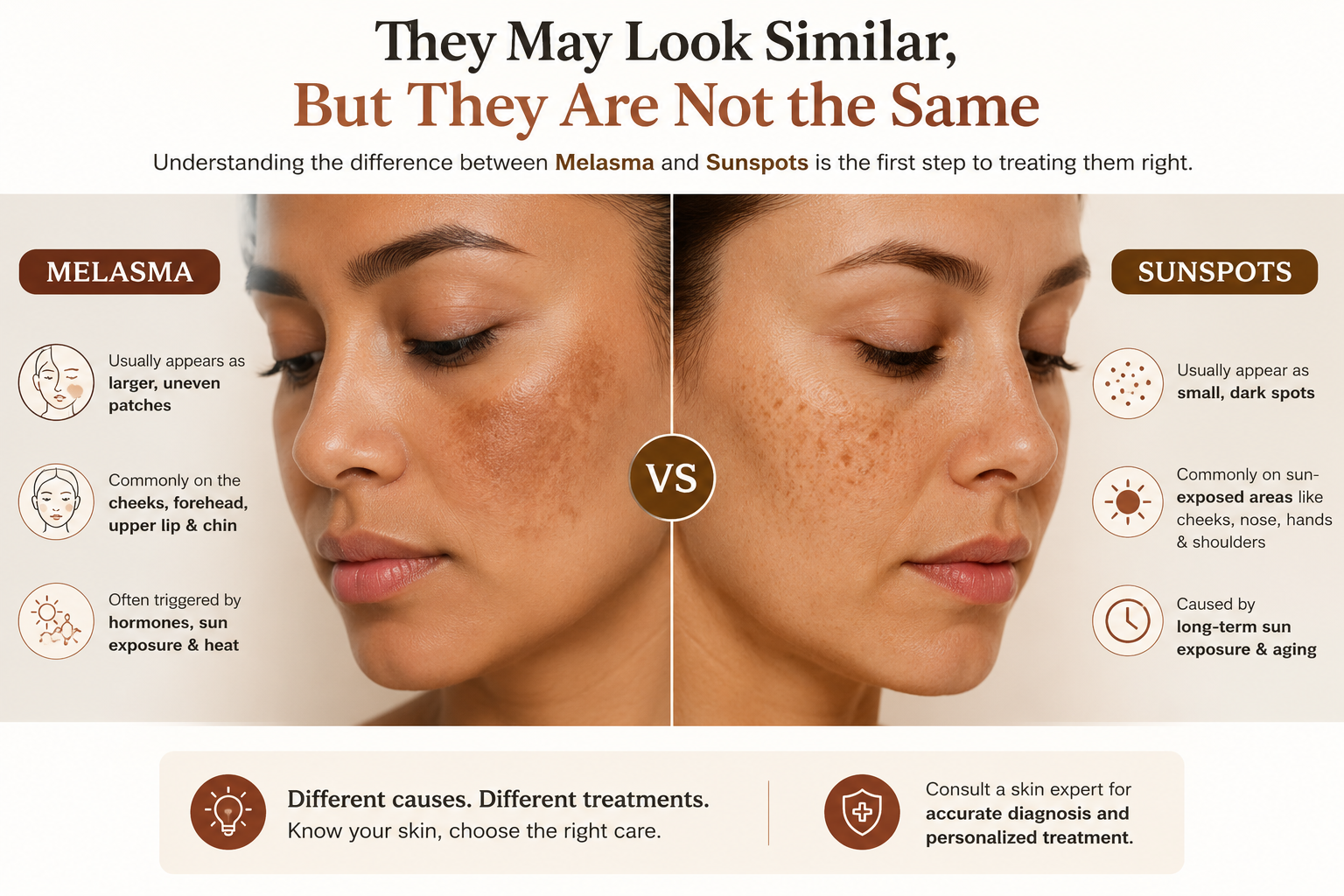
2. Melasma
Melasma causes flat, usually symmetrical brown or grey-brown patches. It
most commonly appears on the cheeks, forehead, nose, chin or upper lip.
Sun exposure and hormonal changes can contribute to melasma. It may develop
during pregnancy or while using certain hormonal medicines. Melasma can fade,
but it may also return, especially without consistent sun protection.
3. Sunspots and Age Spots
Long-term exposure to sunlight may cause flat brown marks, commonly called
sunspots or age spots. They usually appear on areas frequently exposed to the
sun, such as the face, hands, shoulders and arms.
Despite the name, age spots are linked mainly to accumulated sun exposure
rather than ageing alone.
4. Pigmentation Caused by Skin Irritation
Using strong scrubs, bleaching creams, unsuitable chemical peels or
irritating cosmetic products may damage the skin barrier. The resulting
inflammation can make pigmentation worse.
Even products intended to lighten the skin may produce additional dark marks
if they cause burning, dryness or irritation.
5. Pigmentation Related to Medical Conditions
Dark, thick and velvety patches around the neck, underarms or groin may
sometimes be acanthosis nigricans. This can be associated with insulin
resistance, type 2 diabetes, hormonal conditions, certain medicines or excess
body weight.
Sudden, widespread or unexplained pigmentation should therefore be assessed
by a qualified doctor rather than treated only with cosmetic products.
What Causes Dark Spots and Pigmentation?
Dark spots can develop for many different reasons.
Sun Exposure
Ultraviolet radiation stimulates melanin production. Repeated exposure can
darken existing marks and contribute to new spots.
Visible light may also worsen some forms of pigmentation, particularly in
people with darker skin tones. This is why sun protection is one of the most
important parts of prevention and treatment.
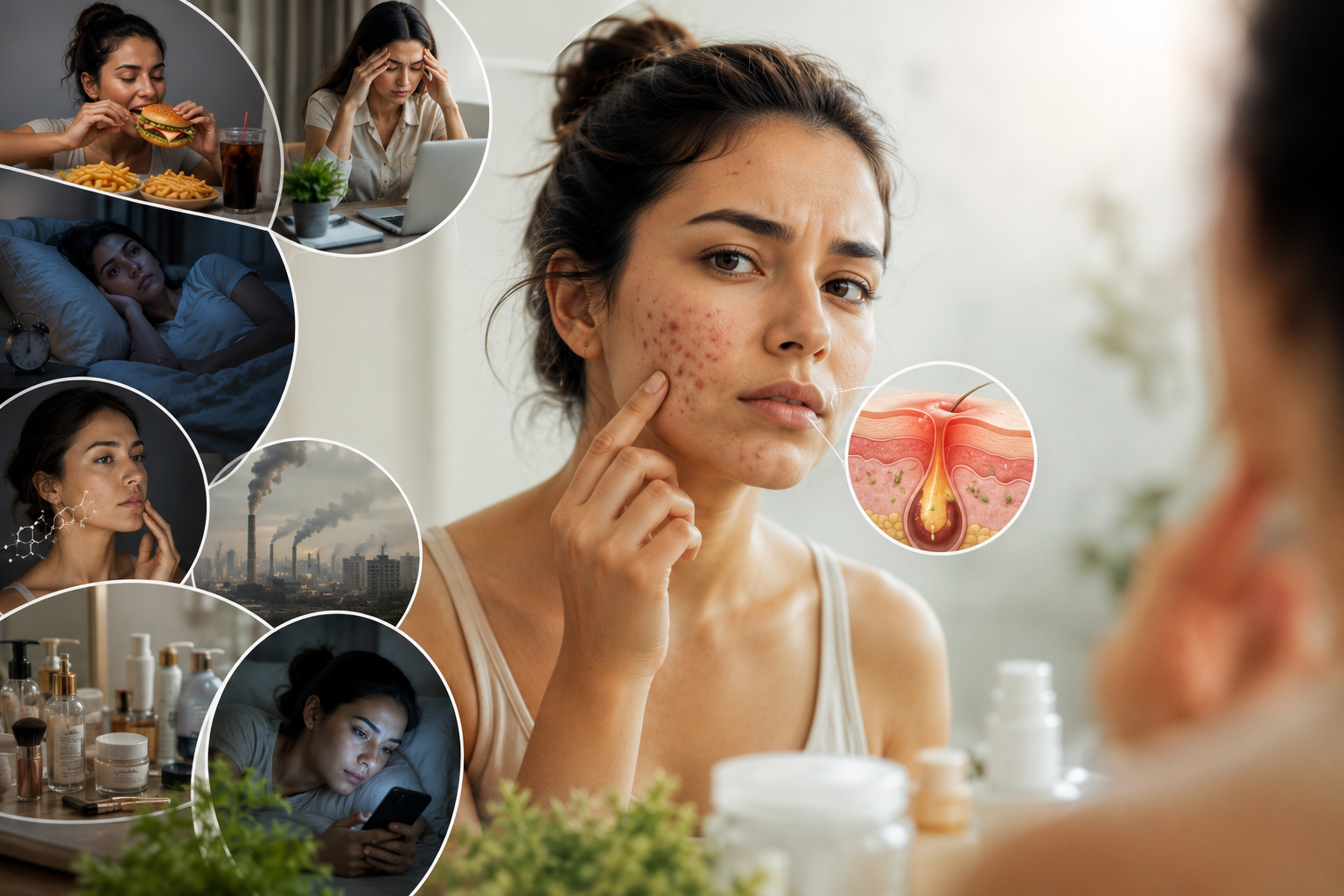
Acne and Skin Inflammation
Pimples, eczema, rashes and skin infections may cause inflammation. As the
skin heals, it may leave behind a flat dark mark.
Picking or squeezing pimples increases inflammation and may raise the risk
of both dark marks and scars.
Hormonal Changes
Pregnancy, hormonal contraception and other hormonal changes may trigger
melasma in some people.
Hormonal pigmentation should be evaluated carefully because not every facial
dark patch is caused by the same condition.
Medicines
Certain medicines can sometimes cause skin pigmentation. Never stop a
prescribed medicine on your own. Consult the prescribing doctor when
pigmentation begins after starting a new treatment.
Skin Injuries and Cosmetic Procedures
Cuts, burns, waxing, threading, aggressive facials, chemical peels and laser
procedures may occasionally cause post-inflammatory pigmentation.
The risk can be greater when procedures are performed incorrectly or without
considering the person’s skin tone and sensitivity. Some laser and peel
treatments may even worsen melasma or pigmentation.
How to Prevent Dark Spots
Not every type of pigmentation can be completely prevented, but these habits
may reduce the risk.
Use Sunscreen Every Day
Apply a broad-spectrum, water-resistant sunscreen with an SPF of at least
30. Use it on the face, neck, ears, hands and other exposed areas.
Reapply it during prolonged outdoor activity, especially after sweating or
swimming. A tinted sunscreen containing iron oxide may provide additional
protection against visible light, which can worsen dark spots.
Avoid Picking Pimples
Do not squeeze, scratch or repeatedly touch acne. Treating acne early can
help prevent new post-inflammatory marks.
Choose Gentle Skincare Products
Use a mild cleanser, fragrance-free moisturiser and products suitable for
your skin type. Stop using a product if it causes persistent burning, itching,
swelling or redness.
Protect the Skin Physically
Wear a hat, sunglasses and protective clothing when spending time outdoors.
Seek shade during strong sunlight whenever possible.
Treat the Underlying Condition
Pigmentation caused by acne, eczema, fungal infection or another skin
condition may continue to appear until the underlying problem is controlled.
Fading the mark alone without treating its cause may provide only temporary
improvement.
A Simple Daily Skincare Routine
Morning Routine
1. Wash
the face with a gentle cleanser.
2. Apply
a moisturiser suitable for your skin type.
3. Apply
broad-spectrum SPF 30 or higher sunscreen.
4. Reapply
sunscreen when necessary.
Evening Routine
1. Remove
makeup and sunscreen gently.
2. Cleanse
the skin without scrubbing.
3. Apply
treatment recommended for your condition.
4. Finish
with a moisturiser.
Introduce only one new active product at a time. This makes it easier to
identify irritation and reduces the risk of damaging the skin barrier.
Ingredients Commonly Used for Pigmentation
Depending on the cause, a dermatologist may recommend ingredients such as:
·
Azelaic acid
·
Vitamin C
·
Retinoids
·
Hydroquinone
·
Glycolic or salicylic acid
·
Other prescription pigment-reducing medicines
Azelaic acid has anti-inflammatory properties and may help with acne-related
pigmentation. Vitamin C products may also help reduce the appearance of dark
spots.
However, stronger does not always mean better. Using several active
ingredients together can irritate the skin and make pigmentation worse.
Hydroquinone and prescription retinoids should be used under professional
guidance, particularly during pregnancy, breastfeeding or when the skin is
sensitive.
Can Home Remedies Remove Pigmentation?
Ingredients such as lemon juice, baking soda, toothpaste and undiluted
essential oils are commonly promoted as remedies for dark spots. These
substances can irritate or burn the skin and may lead to additional
pigmentation.
Natural does not automatically mean gentle or safe.
A balanced diet, adequate sleep and proper hydration support general skin
health, but they cannot replace diagnosis or targeted treatment for persistent
pigmentation.
Homeopathy and Pigmentation Care
Some people choose homeopathy as a complementary approach for their overall
well-being. However, current scientific evidence does not establish homeopathy
as an effective treatment for hyperpigmentation, melasma or dark spots.
It should not replace sunscreen, medical investigations,
dermatologist-recommended treatment or care for an underlying condition. Anyone
using homeopathic products should inform their doctor, especially when using
other medicines or receiving treatment for hormonal or metabolic problems.
When Should You Consult a Dermatologist?
Seek medical advice when:
·
Pigmentation appears suddenly or spreads rapidly
·
A dark spot changes in size, shape or colour
·
A mark becomes painful, itchy, raised or starts
bleeding
·
Dark patches develop around the neck or
underarms
·
Pigmentation begins after starting a medicine
·
Home skincare causes burning or worsening marks
·
Dark spots continue despite regular sun
protection
·
Pigmentation affects confidence or emotional well-being
A spot that is asymmetrical, has an irregular border, contains several
colours or continues changing should be examined promptly. These features can
sometimes be warning signs of melanoma or another skin condition.
Final Thoughts
Dark spots and pigmentation are common, but there is no single treatment
that works for everyone. Successful care begins with identifying the cause.
Daily sun protection, gentle skincare, early treatment of acne and avoidance
of harsh products can help prevent new marks. Existing pigmentation often fades
gradually, so patience and consistency are important.
Consulting a qualified dermatologist is the safest way to understand
persistent or unusual pigmentation and choose treatment according to your skin
type and health needs.
Medical Disclaimer: This article is intended for general
awareness only. It does not replace professional medical advice, diagnosis or
treatment. Always consult a qualified healthcare professional before beginning
any treatment for a skin condition.