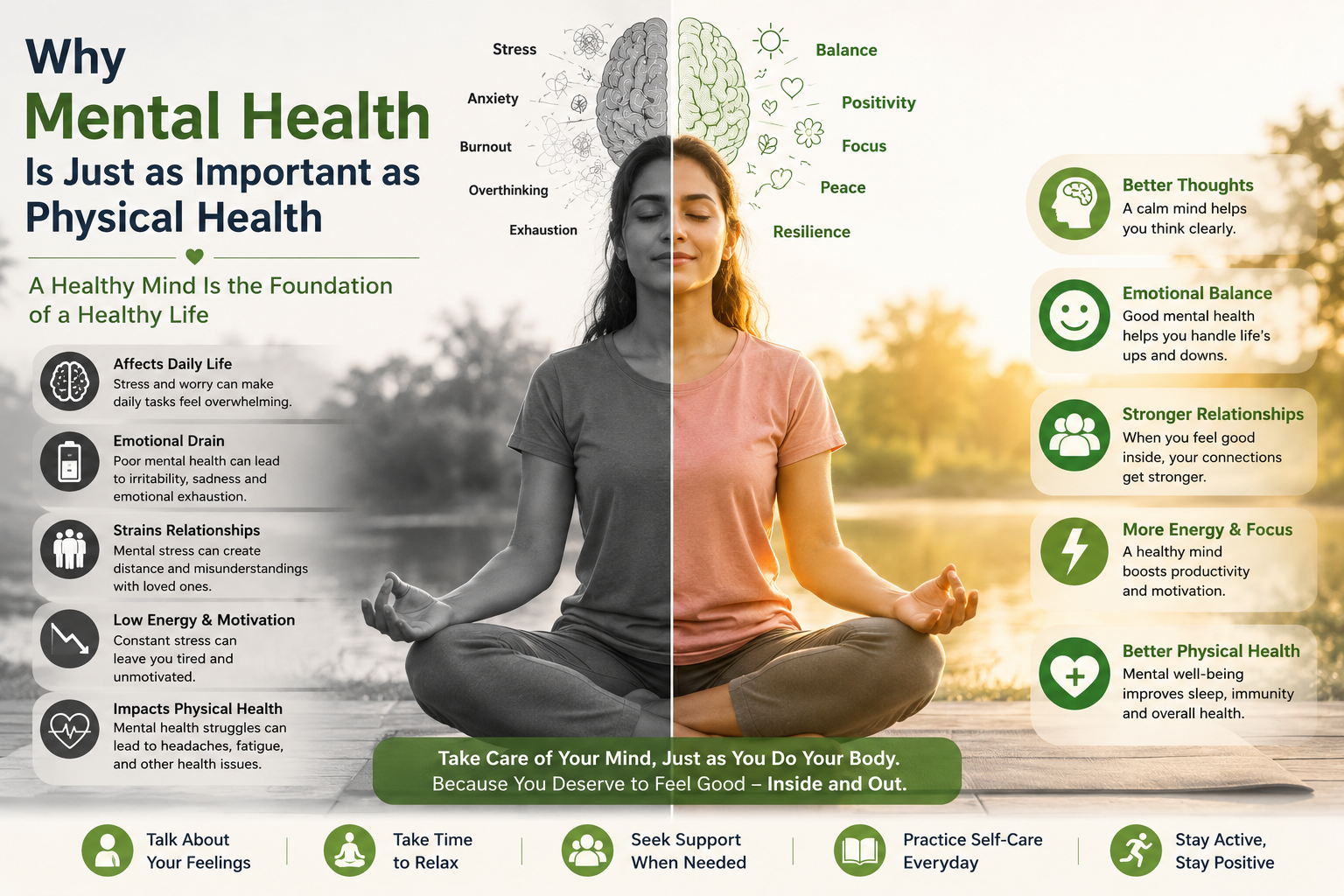
Mental and Physical Health: Two Parts of Complete Wellness
Health is not limited to having a strong body or being free from disease. Complete wellness also includes emotional, psychological and social well-being. Mental health helps us manage stress, maintain relationships, make decisions and handle everyday responsibilities. Physical health helps the body function properly and supports energy, movement and disease prevention. Both are essential parts of overall health.
Ignoring mental health can affect sleep, appetite, energy, concentration and motivation. At the same time, physical illness, pain or disability can cause emotional distress. This is why mental and physical health should not be treated as two completely separate areas.
Key Takeaways
- Mental and physical health are equally important.
- Each can influence the other.
- Mental health is more than the absence of mental illness.
- Exercise, sleep, nutrition and social connection can support both.
- Persistent emotional or physical symptoms deserve professional attention.
- Asking for mental-health support is a responsible health decision, not a sign of weakness.
Mental and physical health are closely connected, and improving one may support aspects of the other.
What Is Mental Health?
Mental health includes emotional, psychological and social well-being. It influences how people think, feel, respond to stress, build relationships and make decisions.
Good mental health does not mean feeling happy all the time. Everyone experiences sadness, anger, worry, disappointment and stress. Healthy mental well-being means being able to recognise these emotions, cope with ordinary challenges and seek help when difficulties become overwhelming.
The World Health Organization describes mental health as a state of well-being that helps people cope with life’s stresses, recognise their abilities, learn, work and contribute to their community.
What Is Physical Health?
Physical health refers to the condition and functioning of the body. It includes areas such as:
- Heart and lung health
- Strength and mobility
- Sleep and energy levels
- Nutrition and digestion
- Immunity
- Management of medical conditions
- Prevention of illness and injury
Physical health is supported by regular activity, balanced nutrition, sufficient sleep, preventive healthcare and appropriate medical treatment.
Regular physical activity can help prevent and manage several noncommunicable diseases while also supporting mental health, quality of life and general well-being.
How Are Mental and Physical Health Connected?
The mind and body continuously influence each other. Mental distress can affect daily habits, while physical symptoms can affect mood and emotional well-being.
Mental health can influence the body
Long-lasting stress, depression or anxiety may be accompanied by:
- Sleep difficulties
- Changes in appetite
- Low energy
- Headaches
- Muscle tension
- Digestive discomfort
- Difficulty following healthy routines
- Reduced motivation to exercise or attend medical appointments
Mental-health conditions may also exist alongside chronic physical illnesses. The CDC notes that depression is associated with an increased risk of conditions such as diabetes, heart disease and stroke.
Physical health can influence the mind
Chronic pain, serious illness, reduced mobility or a major medical diagnosis may lead to fear, sadness, frustration or isolation. Living with a chronic condition can also affect work, finances, relationships and independence.
Chronic physical conditions may increase the likelihood of developing mental-health difficulties, which is why emotional well-being should be considered during physical treatment.
Why Mental Health Deserves Equal Attention
A visible physical injury is often treated quickly, but emotional distress may be hidden or dismissed. People may avoid discussing their mental health because they fear judgement or believe they should manage everything alone.
However, mental-health symptoms can interfere with:
- Work or studies
- Family responsibilities
- Sleep
- Relationships
- Concentration
- Personal hygiene
- Eating habits
- Medical treatment
- Overall quality of life
Mental health is an essential part of health and functioning—not an optional extra. Seeking professional care for emotional difficulties should be viewed in the same way as seeking treatment for persistent physical symptoms.
Signs That Your Mental Health May Need Attention
Occasional stress or sadness is part of normal life. Support may be needed when symptoms are severe, persistent or begin interfering with daily activities.
Possible warning signs include:
- Feeling sad, empty, worried or irritable for a prolonged period
- Losing interest in activities previously enjoyed
- Significant changes in sleep or appetite
- Constant tiredness or lack of motivation
- Difficulty concentrating or making decisions
- Withdrawing from friends and family
- Feeling unable to manage ordinary responsibilities
- Using alcohol or other substances to cope
- Experiencing intense fear or panic
- Feeling hopeless, worthless or unsafe
The presence of one symptom does not automatically mean that someone has a mental-health disorder. A qualified healthcare professional should assess persistent or troubling symptoms.
Lifestyle Habits That Support Complete Wellness
Lifestyle habits cannot prevent or cure every mental or physical condition, but they can form an important part of overall care.
Stay physically active
Walking, cycling, stretching, dancing, yoga and other forms of movement can support the heart, muscles and brain. Physical activity may also help improve mood, sleep, memory and emotional balance and may reduce symptoms of anxiety or depression.
Maintain a regular sleep routine
Try to sleep and wake at consistent times. Reduce screen use before bed and create a calm sleeping environment. Sleep difficulties that continue despite healthy habits should be discussed with a healthcare professional.
NIMH includes sleep, regular exercise and healthy eating among the self-care practices that can support mental health.
Eat regular, balanced meals
A balanced diet supports energy and normal body functioning. Avoid skipping meals regularly, and speak with a qualified professional before starting restrictive diets or supplements.
Stay socially connected
Spending time with trusted friends, family members or supportive groups can reduce feelings of isolation. Strong social connections support belonging and are associated with better mental and physical well-being.
Manage stress in healthy ways
Helpful stress-management practices may include:
- Slow breathing exercises
- Meditation or mindfulness
- Spending time outdoors
- Writing in a journal
- Listening to music
- Practising a hobby
- Breaking large tasks into smaller steps
- Talking to someone trustworthy
Different strategies work for different people. Healthy coping methods should not replace professional support when symptoms are severe.
Avoid smoking and harmful substance use
Smoking, heavy alcohol consumption or drug use may create additional physical and emotional health problems. Speak with a healthcare professional when help is needed to reduce or stop substance use.
Why Self-Care Is Sometimes Not Enough
Self-care is valuable, but it is not a replacement for professional treatment.
A person may follow healthy routines and still experience depression, anxiety, trauma-related symptoms or another mental-health condition. This does not mean they have failed. Mental-health difficulties can be influenced by biological, psychological, social, economic and environmental factors.
Depending on the individual’s needs, appropriate care may include:
- Medical assessment
- Psychological counselling
- Psychotherapy
- Medication
- Lifestyle support
- Treatment for an underlying physical condition
- Support from family or community services
Mental-health conditions can be treated, and a primary-care doctor can help patients understand their options or refer them to a qualified mental-health professional.
A Doctor’s Perspective on Homeopathy
Some individuals choose homeopathy or other complementary approaches as part of their wellness routine. However, mental-health symptoms should first be assessed by an appropriately qualified healthcare professional, particularly when symptoms are persistent, severe or affecting everyday functioning.
Current scientific evidence does not reliably demonstrate that homeopathy is effective for treating any particular health condition. Homeopathy should not replace psychotherapy, prescribed medication, emergency care or treatment recommended by qualified medical and mental-health professionals. Patients should inform their healthcare providers about all remedies, supplements and medicines they use because some products may contain active ingredients or cause interactions.
When Should You Seek Professional Help?
Speak with a doctor or mental-health professional when:
- Emotional symptoms continue or become worse.
- Stress affects work, studies, sleep or relationships.
- You frequently experience panic, extreme fear or hopelessness.
- You cannot manage ordinary daily responsibilities.
- Physical symptoms repeatedly occur without a clear explanation.
- You rely on alcohol or substances to cope.
- Existing treatment is not helping or is causing side effects.
- A physical illness is seriously affecting your emotional well-being.
Seek immediate emergency assistance when someone is in immediate danger, is unable to stay safe or is thinking about harming themselves or another person.
Final Thoughts
Mental health and physical health are not competing priorities. They are two connected parts of complete wellness. Caring for the body can support emotional well-being, while caring for the mind can improve motivation, relationships, decision-making and the ability to manage physical health.
Regular movement, sufficient sleep, balanced meals, healthy coping strategies and supportive relationships can strengthen overall well-being. However, self-care should be combined with professional treatment whenever symptoms are persistent or serious.
Taking mental health seriously is not a weakness. It is an important part of responsible and complete healthcare.
Disclaimer: This article is provided for general educational purposes only. It is not a substitute for diagnosis, medical advice or treatment from a qualified healthcare or mental-health professional