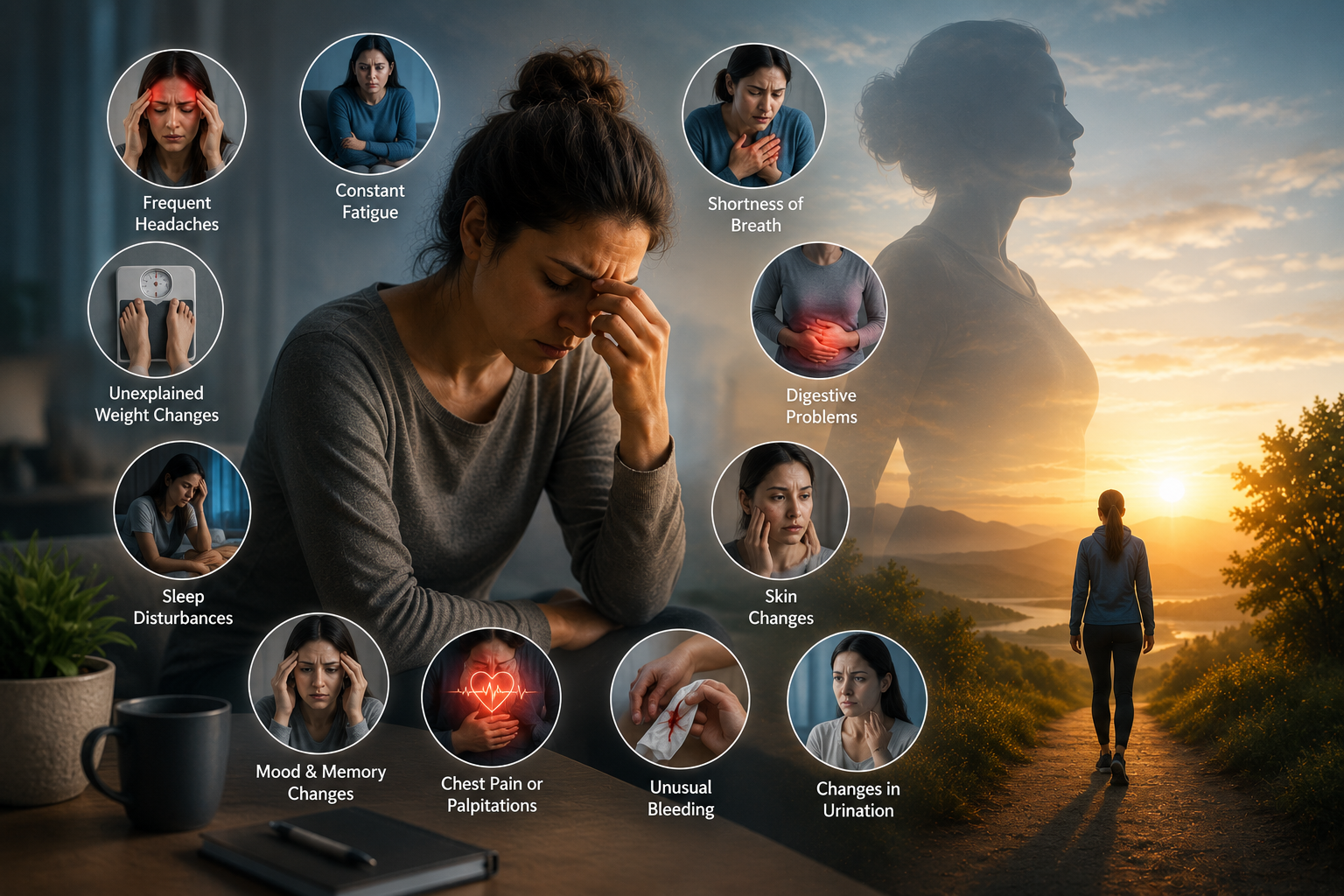
Stress, Periods and Hormones: How Chronic Stress Can Affect Your Menstrual Cycle
Have you ever noticed that your period becomes late during an especially stressful month?
Maybe you've been working longer hours, sleeping poorly, dealing with personal responsibilities, preparing for exams, or simply feeling mentally overwhelmed. Then suddenly, your period arrives earlier than expected, later than usual, or feels different from your normal cycle.
This is not necessarily a coincidence.
Stress and the menstrual cycle are closely connected. Research suggests that psychological stress is associated with menstrual irregularities, including changes in cycle timing and menstrual flow.
But it is important to understand that stress is only one possible factor. Pregnancy, PCOS, thyroid conditions, weight changes, excessive exercise, medications and the transition toward menopause can also affect menstrual cycles.
So, how exactly can stress affect your period?
What Happens to Your Body When You're Stressed?
Stress activates the body's natural stress-response system.
Your brain communicates with several hormone-producing systems to help your body respond to a challenging situation. One important system is called the hypothalamic-pituitary-adrenal (HPA) axis.
During stress, the body increases its stress-response activity, including the release of cortisol.
At the same time, the reproductive system is controlled by another interconnected system involving the:
Hypothalamus ? Pituitary gland ? Ovaries
This is commonly referred to as the hypothalamic-pituitary-ovarian (HPO) axis.
When prolonged stress affects this system, the hormonal signals involved in ovulation can be disrupted. Research reviews describe chronic psychological stress as a possible contributor to ovulatory dysfunction and menstrual irregularities.
In simple terms:
Chronic stress ? changes in stress-response signaling ? possible disruption of reproductive hormone signaling ? changes in ovulation ? possible menstrual changes
1. Stress Can Make Your Period Late
One of the most common changes women notice during stressful periods is a delayed period.
Stress can interfere with the hormonal signals that coordinate ovulation. If ovulation occurs later than usual, menstruation may also occur later.
For example:
Usual cycle: 28 days
During a stressful month: Ovulation occurs later ? period arrives later
This does not mean that every late period is caused by stress.
If pregnancy is possible, a pregnancy test may be appropriate. Persistent irregular periods should also be discussed with a healthcare professional.
The NHS lists stress and anxiety among common possible causes of irregular periods.
2. Stress May Sometimes Cause a Missed Period
In situations involving significant or prolonged stress, menstrual periods may stop temporarily.
This can occur when the brain reduces some of the hormonal signaling required for normal reproductive function.
When periods stop for three months or more without an obvious explanation, this is called secondary amenorrhea and should be medically evaluated. Stress is one possible cause, but there are several others.
Other possible causes include:
Pregnancy
PCOS
Thyroid problems
Significant weight loss
Low body weight
Excessive exercise
Certain medications
Other medical conditions
Therefore, a missed period should not automatically be blamed on stress.
3. Stress Can Affect Ovulation
Ovulation is an important part of the menstrual cycle.
Normally, a series of hormonal signals helps an ovarian follicle develop and eventually release an egg.
Chronic stress may interfere with this hormonal communication.
Research examining stress and reproductive function suggests that activation of the body's stress-response pathways can suppress signals involved in the reproductive hormone system.
When ovulation is delayed or does not occur, the menstrual cycle may become irregular.
This is one reason why stress can sometimes affect both period timing and fertility.
4. Your Period Flow May Change
Stress does not affect every woman's menstrual cycle in exactly the same way.
Some women may notice changes in:
Timing
Flow
Duration
Spotting
PMS symptoms
However, unusually heavy bleeding or bleeding between periods should not simply be attributed to stress.
Abnormal uterine bleeding can have several causes, including problems with ovulation, fibroids, polyps, thyroid conditions and other medical issues.
If your normal bleeding pattern changes significantly or repeatedly, seek appropriate medical advice.
5. Stress Can Make PMS Feel More Difficult
Premenstrual syndrome, or PMS, can involve both physical and emotional symptoms.
These may include:
Irritability
Anxiety
Mood changes
Headaches
Breast tenderness
Bloating
Food cravings
Fatigue
Sleep difficulties
Difficulty concentrating
ACOG notes that PMS symptoms can affect normal daily activities and that stress-reduction techniques may help some women manage symptoms.
If you're already under significant stress, the combination of stress, poor sleep and premenstrual symptoms may make the days before your period feel particularly difficult.
6. Stress and Sleep Can Create a Cycle
Stress and sleep are closely connected.
When you're stressed, you may find it harder to fall asleep or stay asleep.
Then, after a poor night's sleep, you may feel:
More tired
More irritable
Less focused
Less able to cope with stress
This can create a cycle:
Stress ? Poor sleep ? Fatigue ? More stress ? Poor sleep
Over time, this can affect your overall wellbeing and may also coincide with changes in your menstrual cycle.
That's why managing stress often involves more than simply "thinking positively."
Sleep, physical activity, nutrition, relaxation and adequate recovery all matter.
7. Stress Combined With Weight Loss or Excessive Exercise Can Affect Periods
Stress does not always occur by itself.
During stressful periods, some women may eat less, exercise more, lose weight or sleep poorly.
A combination of high stress, insufficient energy intake and excessive exercise can interfere with normal reproductive hormone signaling.
This is particularly relevant for athletes and women following very restrictive diets.
Research has linked high stress, low energy availability and excessive exercise with functional hypothalamic amenorrhea, a condition in which menstrual periods stop because of disrupted reproductive hormone signaling.
If your periods become irregular after a major change in exercise, diet or body weight, discuss the change with a healthcare professional.
8. Chronic Stress Does Not Affect Every Woman the Same Way
Two women can experience the same stressful situation and have completely different menstrual responses.
One may have a perfectly regular cycle.
Another may experience a delayed period.
Someone else may notice changes in PMS, sleep or energy.
Research on stress and menstrual irregularity has found an overall association, but studies vary in how stress and menstrual changes are measured.
This means there is no single "stress level" at which your period will definitely change.
Your individual health, nutrition, sleep, reproductive stage and other factors matter too.
How Can You Tell If Stress Is Affecting Your Period?
The best way is to look for a pattern.
Instead of tracking only the date your period begins, record a few additional details for several months.
Track your:
Period
Start date
End date
Flow
Spotting
Stress
Low
Moderate
High
Sleep
Hours slept
Sleep quality
Nighttime waking
Symptoms
Cramps
Headaches
Bloating
Mood changes
Fatigue
Food cravings
Lifestyle
Exercise
Major weight changes
Significant changes in diet
Major life events
After a few cycles, you may notice patterns.
For example:
High-stress month ? delayed ovulation ? late period
or:
High stress + poor sleep ? stronger PMS symptoms
Tracking does not diagnose the cause, but it can provide useful information for a healthcare consultation.
9. Simple Ways to Reduce the Impact of Stress
You cannot always remove the source of stress.
But you can work on how your body responds to it.
Prioritize Sleep
Try to maintain a consistent bedtime and wake-up time.
Good-quality sleep supports overall physical and emotional health.
Stay Physically Active
Walking, cycling, swimming, yoga or other enjoyable forms of movement can help support general wellbeing.
Avoid excessive exercise, particularly if your periods are becoming irregular.
Eat Regularly
Avoid routinely skipping meals or following extremely restrictive diets.
Your reproductive system needs adequate energy and nutrients to function normally.
Practice Relaxation
Try:
Deep breathing
Meditation
Yoga
Gentle stretching
Reading
Quiet music
Spending time outdoors
ACOG notes that relaxation techniques such as breathing exercises, meditation and yoga may help women manage PMS symptoms.
Create Boundaries
Constant availability can keep the brain in a state of continuous stimulation.
Where possible, create boundaries around:
Work
Social media
Emails
Screen time
Personal time
Even small changes can make your daily routine feel more manageable.
When Should You See a Doctor?
It is normal for your cycle to vary occasionally.
However, don't assume that every menstrual change is caused by stress.
Speak with a healthcare professional if:
Your periods become repeatedly irregular
Your periods stop for three months or more
Your cycles repeatedly occur less than 21 days apart or more than 35 days apart
Your bleeding lasts more than 7 days
You experience bleeding between periods
Your periods suddenly become much heavier
You have severe menstrual pain
You are having difficulty becoming pregnant
You experience other new or concerning symptoms
The NHS recommends medical advice when periods become irregular or your normal pattern changes.
ACOG also identifies cycles shorter than 21 days, longer than 35 days, significant variation in cycle length, bleeding lasting more than 7 days and prolonged absence of periods as patterns that may require evaluation.
What About Hormone Testing?
Seeing a late period or experiencing stress does not automatically mean you need a complete hormone panel.
The appropriate evaluation depends on your symptoms, medical history, age, menstrual pattern and other factors.
A healthcare professional can determine whether testing is necessary and which tests, if any, are appropriate.
This is important because menstrual changes can have many different causes.
Can Homeopathy Be Part of Women's Wellness?
Some women explore complementary approaches, including homeopathy, when dealing with stress, menstrual discomfort or other women's wellness concerns.
A homeopathic consultation may consider an individual's overall symptoms, lifestyle and health history.
However, persistent menstrual irregularities, missed periods, heavy bleeding or fertility concerns may require medical evaluation. Complementary care should not replace appropriate diagnosis or evidence-based treatment.
If your menstrual cycle has changed significantly or persistently, consult a qualified healthcare professional.
The Bottom Line
Stress is more than an emotional experience. Your body responds to stress through complex biological systems that interact with reproductive hormone signaling.
For some women, prolonged or significant stress may contribute to:
Delayed periods
Irregular cycles
Changes in ovulation
Missed periods
Changes in PMS symptoms
But stress is only one possible explanation.
If your cycle changes, look at the bigger picture:
Stress + Sleep + Nutrition + Exercise + Weight + Overall Health
Tracking your menstrual cycle alongside these factors can help you understand patterns and have a more informed conversation with your healthcare professional.
And most importantly, don't ignore persistent changes.
Your period can be an important indicator of changes happening in your body, so unusual or ongoing changes deserve attention rather than simply being dismissed as "stress."
Medical Disclaimer
This article is intended for general educational purposes only and is not a substitute for professional medical advice, diagnosis or treatment. Menstrual irregularities can have many causes. If you have persistent changes in your cycle, missed periods, unusually heavy bleeding, severe pain or fertility concerns, consult a qualified healthcare professional.