The Connection Between Gut Health and Skin: What You Should Know
When people think about healthy skin, they often focus on skincare products, moisturizers, cleansers, and sunscreen. But skin health is influenced by more than what we apply externally.
Researchers are increasingly studying the relationship between the gut, the immune system, the microbiome, and the skin. This communication is commonly called the gut-skin axis.
The gut contains trillions of microorganisms that interact with the body and play important roles in digestion, metabolism, and immune function. Research suggests that changes in the gut microbiome may be associated with certain inflammatory skin conditions, although many of the exact mechanisms are still being investigated.
What Is the Gut-Skin Axis?
The gut-skin axis refers to the two-way communication between the gastrointestinal system and the skin.
The gut and skin are both important interfaces between the body and the outside environment. They also interact with the immune and nervous systems.
Scientists believe that communication between the gut and skin can involve:
Immune-system activity
Microbial metabolites
Inflammatory pathways
Hormonal and neurological signals
Nutritional factors
Changes in the gut and skin microbiomes
Because of this connection, changes in one system may potentially influence the other. However, the relationship is complex and does not mean that every skin problem is caused by poor gut health.
What Is the Gut Microbiome?
The gut microbiome refers to the community of microorganisms living in the digestive tract.
These microorganisms include different types of bacteria and other microbes. A healthy and diverse microbial environment contributes to normal gut function and interacts with the body's immune system.
The composition of the gut microbiome can be influenced by factors such as:
Diet
Age
Lifestyle
Medications
Antibiotic use
Environment
Overall health
Researchers use the term dysbiosis to describe an imbalance or alteration in the microbial community. Dysbiosis has been associated with several inflammatory conditions, including some skin disorders, although association does not necessarily prove that it is the direct cause.
How Can Gut Health Influence the Skin?
1. Immune System Communication
A large part of the body's immune activity is associated with the gastrointestinal system.
The gut microbiome interacts with immune cells and may influence inflammatory responses. Because the immune system also plays an important role in many skin conditions, changes in gut microbial activity are being studied as one possible factor in skin inflammation.
2. Microbial Metabolites
Gut microorganisms produce various substances during their interaction with food and the body.
Some of these microbial metabolites can enter circulation and potentially influence processes outside the digestive system, including immune and inflammatory pathways that may affect skin health.
Researchers are particularly interested in compounds such as short-chain fatty acids, although the exact effects and clinical significance are still being investigated.
3. Nutrition
What we eat provides nutrients that support both the body and the microorganisms living in the gut.
A balanced diet containing a variety of vegetables, fruits, whole grains, legumes, nuts, seeds, and other nutrient-rich foods can support overall health.
Research into nutrition, the gut microbiome, and skin health is growing, but individual foods should not automatically be considered treatments for skin diseases.
4. Inflammation
Inflammation is involved in several skin conditions, including acne, psoriasis, and atopic dermatitis.
Because the gut microbiome can interact with the immune system, researchers are investigating whether changes in gut microbial communities may contribute to inflammatory processes affecting the skin.
Which Skin Conditions Are Being Studied?
Researchers have investigated possible connections between the gut microbiome and several skin conditions.
Acne
Acne is a complex inflammatory skin condition influenced by factors such as hormones, genetics, sebum production, skin-cell changes, and inflammation.
Studies have also identified differences in gut microbial patterns in some people with acne. Research into diet and probiotics is ongoing, but these approaches should not be considered replacements for established acne treatments.
Atopic Dermatitis
Atopic dermatitis is a chronic inflammatory skin condition involving the skin barrier and immune system.
Research has found associations between changes in the gut microbiome and atopic dermatitis. Some studies have investigated probiotics, particularly in children, but results vary and there is not enough evidence to recommend a single probiotic approach for everyone.
Psoriasis
Psoriasis involves immune-system activity and chronic inflammation.
Researchers have observed differences in gut microbial communities in people with psoriasis and are studying whether the gut-skin relationship may contribute to inflammatory processes. More research is needed to understand whether modifying the microbiome can meaningfully change psoriasis outcomes.
Rosacea and Other Conditions
The gut-skin relationship is also being investigated in conditions such as rosacea, dandruff, hidradenitis suppurativa, and other inflammatory skin disorders.
However, research findings differ between conditions and individuals. The gut microbiome is a rapidly developing area of dermatological research, and many proposed mechanisms still require further clinical evidence.
Can Improving Gut Health Improve Your Skin?
Supporting overall gut health is a sensible part of maintaining general wellbeing, but it is important to avoid exaggerated claims.
A healthy diet and lifestyle can provide the nutrients and conditions needed for normal body function. However, there is currently no single "gut-healing" diet that has been proven to cure all skin problems.
Similarly, taking a probiotic does not automatically mean that a person's skin will become clearer or healthier.
Different probiotic strains can have different effects, and research findings are not consistent enough to recommend probiotics as a universal treatment for skin conditions.
Foods That Support a Balanced Diet
Rather than focusing on one particular food, aim for variety and balance.
Consider including:
Fruits and Vegetables
These provide vitamins, minerals, fiber, and plant compounds that support overall health.
Whole Grains
Foods such as oats, whole wheat, brown rice, and other whole grains provide dietary fiber.
Legumes
Beans, lentils, chickpeas, and similar foods can provide fiber and plant-based nutrients.
Nuts and Seeds
Nuts and seeds provide healthy fats, protein, fiber, and other nutrients.
Fermented Foods
Depending on individual tolerance and dietary preferences, foods such as yogurt and other fermented foods may contribute to dietary variety and provide live microorganisms.
However, people with specific digestive conditions or food intolerances may need individualized dietary advice.
What Can Harm Gut Health?
Several factors can influence the gut microbiome and digestive health.
These may include:
Diets lacking dietary variety
Excessive consumption of highly processed foods
Low fiber intake
Certain medications
Antibiotic exposure
Chronic stress
Poor sleep
Sedentary lifestyle
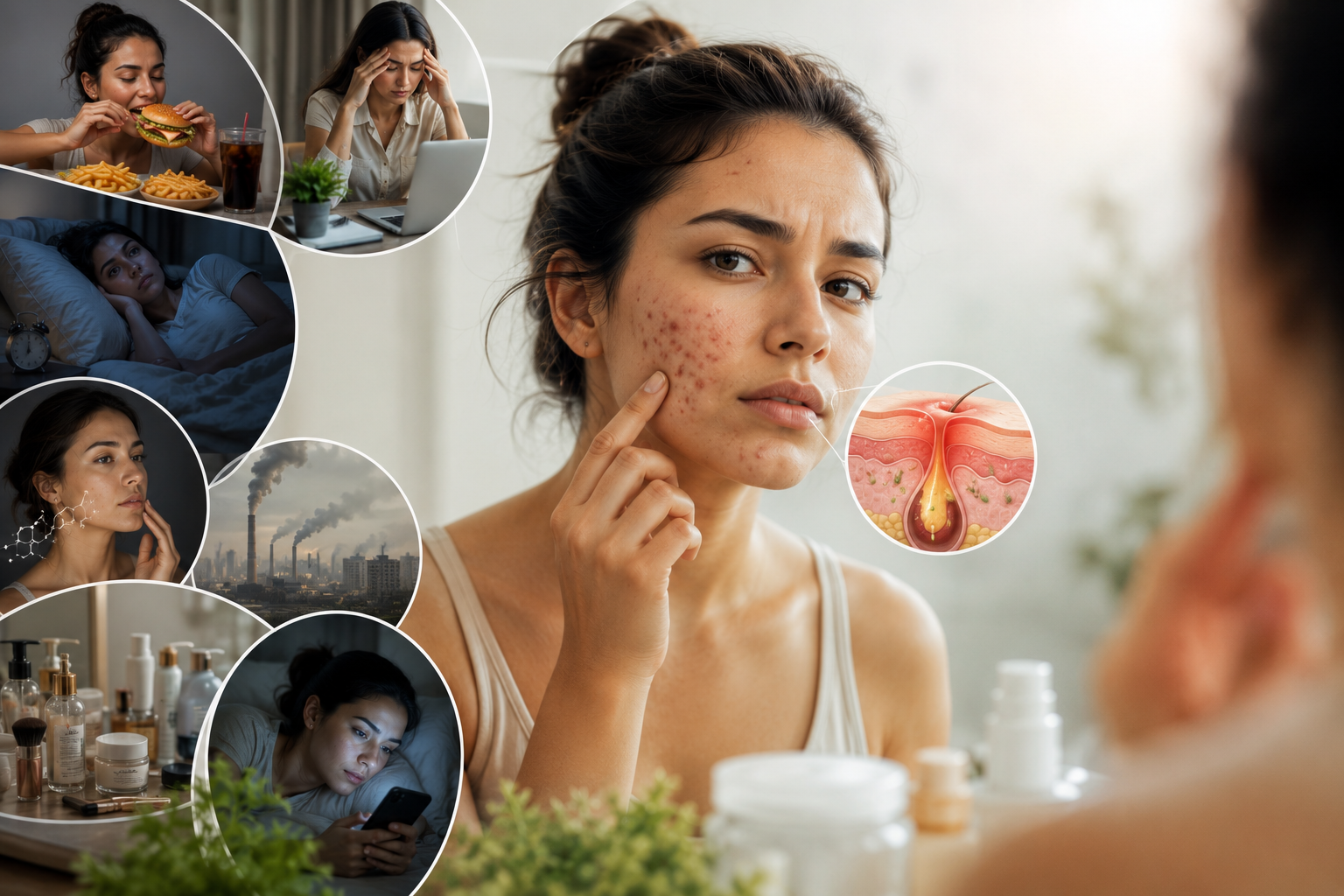
This does not mean that any one factor automatically causes a skin condition. Skin health is influenced by multiple factors, including genetics, hormones, environment, skincare habits, and immune function.
What About Probiotics?
Probiotics are live microorganisms that may provide health benefits when consumed in adequate amounts.
Interest in probiotics for skin health has increased because of research into the gut-skin axis.
Some studies have reported potential benefits for particular skin conditions, but results vary according to the probiotic strain, dose, condition being studied, and characteristics of the individual. Clinical evidence remains limited for many applications.
Therefore, probiotics should not be treated as a universal solution for acne, eczema, pigmentation, or other skin concerns.
If you are considering a probiotic supplement, particularly if you have a medical condition or take medication, discuss it with a qualified healthcare professional.
Simple Ways to Support Both Gut and Skin Health
You do not need a complicated wellness routine.
Focus on basic healthy habits:
Eat a varied, balanced diet
Include fiber-rich foods regularly
Eat a variety of fruits and vegetables
Drink adequate fluids according to your individual needs
Get regular physical activity
Maintain a consistent sleep routine
Avoid unnecessary antibiotic use
Avoid smoking
Manage stress in healthy ways
Follow a skincare routine appropriate for your skin type
Use sunscreen when exposed to sunlight
These habits support overall health rather than targeting the gut or skin in isolation.
Don't Ignore Persistent Skin Problems
While gut health may be one piece of the picture, persistent skin symptoms should not automatically be blamed on the digestive system.
Acne, eczema, psoriasis, rosacea, persistent rashes, pigmentation, and other skin problems can have many causes.
If you experience persistent itching, inflammation, painful lesions, rapidly changing skin, significant hair loss, or a rash that does not improve, consult a dermatologist or qualified healthcare professional.
Proper diagnosis is important because different skin conditions require different approaches.
What About Homeopathic Care?
Some people seek homeopathic care as part of their approach to individual skin or digestive concerns. A homeopathic practitioner may consider a person's symptoms, lifestyle, and overall health when developing an individualized approach.
However, the gut-skin axis is an evolving area of scientific research. Homeopathic care should not replace appropriate medical assessment or evidence-based treatment for diagnosed skin or gastrointestinal conditions.
Final Thoughts
The connection between the gut and skin is an interesting and growing area of research.
The gut-skin axis suggests that the gut microbiome, immune system, nutrition, and skin may communicate through several biological pathways. Research has found associations between changes in the gut microbiome and conditions such as acne, atopic dermatitis, and psoriasis, but many questions remain unanswered.
For everyday skin health, focus on the fundamentals: a varied and balanced diet, adequate nutrition, regular activity, good sleep, stress management, appropriate skincare, and sun protection.
Healthy skin is not determined by one food, one supplement, or one skincare product. It is influenced by the overall interaction between your genetics, lifestyle, environment, immune system, and many other factors.
Disclaimer: This article is intended for general educational purposes only and does not replace professional medical advice, diagnosis, or treatment. If you have persistent digestive symptoms or a skin condition, consult a qualified healthcare professional for personalized guidance.