Creating a Healthy Home Environment for Children
A healthy home environment plays a vital role in a child's physical, mental, and emotional well-being. Home is where children learn habits, build relationships, and develop important life skills. By creating a safe, supportive, and nurturing environment, parents and caregivers can help children grow into healthy and confident individuals.
Maintain a Clean and Safe Home
Keeping the home clean helps reduce the spread of germs and creates a comfortable living space. Regular cleaning, proper waste disposal, and good ventilation contribute to a healthier environment.
Parents should also childproof the home by covering electrical outlets, securing heavy furniture, storing medicines and cleaning products safely, and keeping small objects out of reach of young children.
Encourage Healthy Eating Habits
Nutritious meals are essential for a child's growth and development. A healthy home should include a variety of fresh fruits, vegetables, whole grains, lean proteins, and dairy or suitable alternatives.
Parents can encourage healthy eating by serving balanced meals, limiting sugary snacks and drinks, and involving children in meal planning and preparation.
Promote Regular Physical Activity
Children need daily physical activity to support healthy growth, strong muscles and bones, and overall fitness. Encourage activities such as outdoor play, cycling, dancing, sports, or family walks.
Limiting sedentary time and making physical activity a fun part of daily life can help children stay active and healthy.
Create Healthy Sleep Habits
Adequate sleep is important for learning, growth, and emotional well-being. Establish a consistent bedtime routine and create a quiet, comfortable sleeping environment.
Reducing screen use before bedtime and maintaining regular sleep schedules can help children enjoy better-quality sleep.
Support Emotional Well-Being
A loving and supportive home helps children feel safe and valued. Spend quality time together, listen to your child's thoughts and feelings, and encourage open communication.
Showing appreciation, offering encouragement, and providing emotional support help children build confidence and resilience.
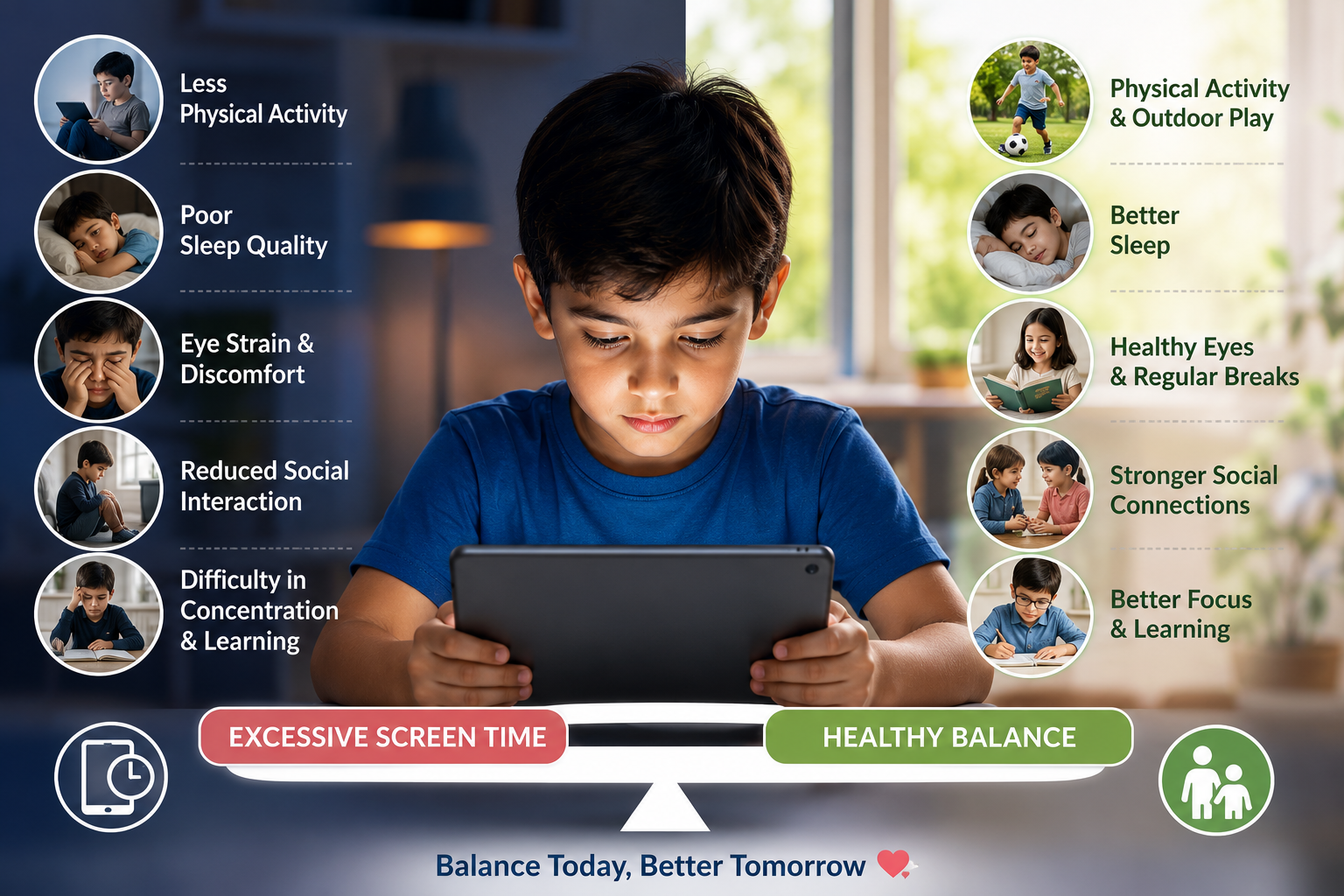
Manage Screen Time Wisely
Digital devices can be useful for learning and entertainment, but excessive screen time may affect sleep, physical activity, and social interaction.
Set reasonable screen-time limits, encourage educational content, and create screen-free times during meals and before bedtime.
Teach Good Hygiene Practices
Healthy hygiene habits help protect children from illness. Teach children to wash their hands regularly, brush their teeth twice a day, bathe regularly, and cover their mouth when coughing or sneezing.
Making hygiene part of the daily routine helps children develop lifelong healthy habits.
Encourage Learning and Creativity
A healthy home supports both education and creativity. Provide opportunities for reading, drawing, puzzles, storytelling, music, and educational games.
These activities help improve imagination, problem-solving skills, and cognitive development.
Be a Positive Role Model
Children often learn by observing adults. Parents and caregivers can set a positive example by practicing healthy eating, regular exercise, kindness, respect, and responsible screen use.
When adults model healthy behaviors, children are more likely to adopt them as part of their own lifestyle.
Conclusion
Creating a healthy home environment is one of the best ways to support a child's overall development. A clean and safe home, nutritious food, regular physical activity, quality sleep, emotional support, good hygiene, and balanced screen time all contribute to a child's well-being.
By building healthy habits at home and providing a caring environment, parents and caregivers can help children develop the skills and confidence they need to grow into healthy, happy, and responsible adults.