Healthy Habits for Better Child Health and Development
A child’s early years are an important time for physical, mental, and
emotional development. The habits children develop during this stage can
influence their health and well-being as they grow. Encouraging healthy daily
routines can help children stay active, build confidence, and develop a strong
foundation for a healthy lifestyle.
Eat a Balanced Diet
A balanced diet provides children with the nutrients they need for healthy
growth and development. Meals should include a variety of foods such as fruits,
vegetables, whole grains, protein-rich foods, and dairy or suitable
alternatives.
Parents and caregivers can encourage healthy eating by offering a variety of
nutritious foods and limiting foods and drinks that are high in added sugar and
unhealthy fats.
Get Enough Sleep
Proper sleep is essential for children. During sleep, the body and brain get
time to rest, recover, and develop.
Creating a regular bedtime routine can help children develop healthy
sleeping habits. A calm bedtime environment and consistent sleep schedule may
also support better rest.
Stay Physically Active
Regular physical activity helps children build strong muscles and bones,
maintain fitness, and develop coordination. Activities such as playing
outdoors, walking, cycling, dancing, and sports can make exercise enjoyable.
Active play also supports social development and helps children learn
teamwork and communication skills.
Maintain Good Hygiene
Teaching children good hygiene habits can help protect them from common
infections and illnesses. Important habits include washing hands regularly,
brushing teeth, bathing, keeping nails clean, and covering the mouth and nose
when coughing or sneezing.
Teaching these habits early can help children become more independent in
caring for their health.
Manage Screen Time
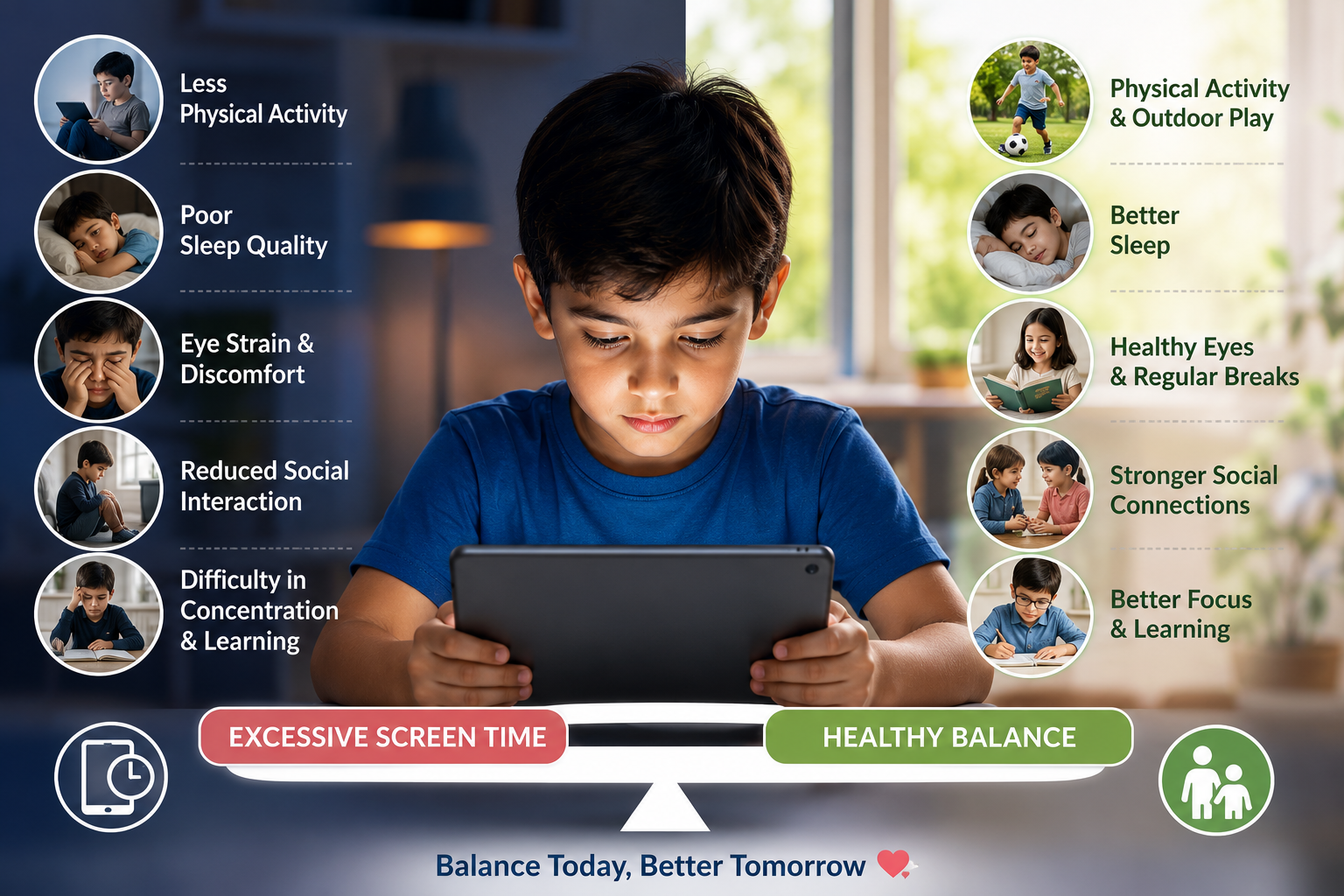
Digital devices can be useful for learning and entertainment, but excessive
screen time may affect sleep, physical activity, and daily routines.
Encouraging children to take regular breaks and spend time playing, reading,
being physically active, and interacting with family can help create a healthy
balance.
Support Mental and Emotional Health
Children need emotional support as well as physical care. Parents and
caregivers can support emotional well-being by listening to children,
encouraging open communication, and creating a safe and supportive environment.
Helping children understand and express their feelings can also support
emotional development and confidence.
Encourage Healthy Social Habits
Spending time with family and friends helps children develop important
social skills. Playing with others, sharing, communicating, and working as a team
can help children build healthy relationships.
Positive social experiences can also support emotional development and
self-confidence.
Create Consistent Daily Routines
Children often benefit from predictable daily routines. Regular times for
meals, school, play, physical activity, and sleep can help children feel secure
and organized.
A consistent routine can also make it easier for children to develop healthy
habits over time.
Conclusion
Healthy habits are an important part of a child’s growth and development. A
balanced diet, enough sleep, regular physical activity, good hygiene, balanced
screen time, and emotional support can all contribute to a child’s overall
well-being.
By encouraging healthy habits from an early age, parents and caregivers can
help children develop a strong foundation for a healthier and happier future.