Sleep Problems in Children: Causes, Effects and Healthy Sleep Routines
Introduction
A good night's sleep is essential for every child's physical growth, brain development and emotional well-being. Just like healthy nutrition and regular physical activity, proper sleep plays an important role in childhood development.
However, many parents notice that their children struggle to fall asleep, wake up frequently during the night, resist bedtime or feel tired even after sleeping.
These sleep difficulties can affect a child's mood, concentration, learning ability and daily activities. Sometimes, irregular routines or excessive screen exposure may contribute to poor sleep, while other cases may involve medical or behavioural conditions.
Understanding the common causes of sleep problems and establishing healthy bedtime habits can help parents support their children's overall health.
In this article, we will explore common childhood sleep problems, their possible causes, their effects and practical ways to develop healthier sleep routines.
Why Is Sleep Important for Children?
Sleep is not simply a period of rest. It is an important process during which the body and brain recover, develop and perform essential functions.
Adequate sleep supports:
1. Physical Growth: Sleep supports normal growth and physical development.
2. Brain Development: Quality sleep helps the brain process information and develop important cognitive skills.
3. Memory and Learning: Well-rested children may find it easier to remember information, concentrate and learn new things.
4. Emotional Well-being: Proper sleep supports emotional regulation and may help children manage everyday stress.
5. Immune Function: Healthy sleep supports the body's immune system.
6. Daily Energy: Children who sleep adequately are generally better prepared for school, play and other daily activities.
Insufficient sleep over time can affect children's attention, behaviour, learning and overall health.
How Much Sleep Do Children Need According to Their Age?
Sleep requirements change as children grow. Younger children generally need more sleep, including daytime naps.
The following recommendations provide a general guide.
| Age group | Recommended sleep |
|---|---|
| Newborns (0–3 months) | 14–17 hours |
| Infants (4–12 months) | 12–16 hours |
| Toddlers (1–2 years) | 11–14 hours |
| Preschool children (3–5 years) | 10–13 hours |
| School-age children (6–12 years) | 9–12 hours |
| Teenagers (13–17 years) | 8–10 hours |
These totals include daytime naps where applicable. Individual sleep needs may vary.
Source: CDC and American Academy of Sleep Medicine recommendations.
8 Common Sleep Problems in Children
Children can experience different types of sleep difficulties depending on their age, daily routines and health conditions.
1. Difficulty Falling Asleep
Some children take a long time to fall asleep even when they feel tired.
Possible reasons include:
Irregular bedtime schedules.
Excessive screen exposure before bed.
Anxiety or worries.
Exciting activities close to bedtime.
Uncomfortable sleeping environments.
A consistent bedtime routine can help children gradually prepare for sleep.
2. Frequent Night-Time Awakenings
Some children wake up several times during the night and struggle to return to sleep.
Possible contributing factors include:
Changes in sleeping habits.
Night-time fears.
Hunger or discomfort in younger children.
Illness or pain.
Environmental disturbances.
Frequent awakenings that affect daytime functioning should be discussed with a paediatrician.
3. Bedtime Resistance
Children may refuse to go to bed, request repeated attention or find different reasons to delay sleeping.
This behaviour is particularly common among toddlers and preschool children.
Establishing predictable bedtime activities can help children understand when it is time to sleep.
4. Nightmares
Nightmares are frightening dreams that may cause children to wake up feeling scared or upset.
They can occur at different childhood stages and may sometimes be associated with stress, illness or frightening experiences.
Parents can reassure children, provide comfort and maintain a calm sleeping environment.
5. Night Terrors
Night terrors are episodes in which a child may suddenly appear frightened, scream or move around while still asleep.
Unlike nightmares, children usually remain asleep during these episodes and may not remember them the next morning.
Frequent, prolonged or potentially dangerous episodes should be discussed with a healthcare professional.
6. Snoring and Breathing Difficulties During Sleep
Occasional snoring may occur during a cold or nasal congestion. However, regular loud snoring, gasping or pauses in breathing should not be ignored.
These symptoms may indicate obstructive sleep apnoea, a condition in which breathing is repeatedly interrupted during sleep.
Medical evaluation is important if these symptoms occur regularly.
7. Sleepwalking
Sleepwalking involves performing activities while partially asleep.
Children may sit up, walk around or perform simple movements without being fully aware of their surroundings.
Parents should make the sleeping environment safe by securing windows, stairs and doors.
Frequent or potentially harmful sleepwalking episodes require medical advice.
8. Excessive Daytime Sleepiness
A child who regularly feels sleepy during school hours, struggles to wake up or lacks energy despite spending sufficient time in bed may have poor sleep quality or an underlying sleep problem.
Parents should discuss persistent daytime sleepiness with a paediatrician.
What Causes Sleep Problems in Children?
Several factors can interfere with children's normal sleeping patterns.
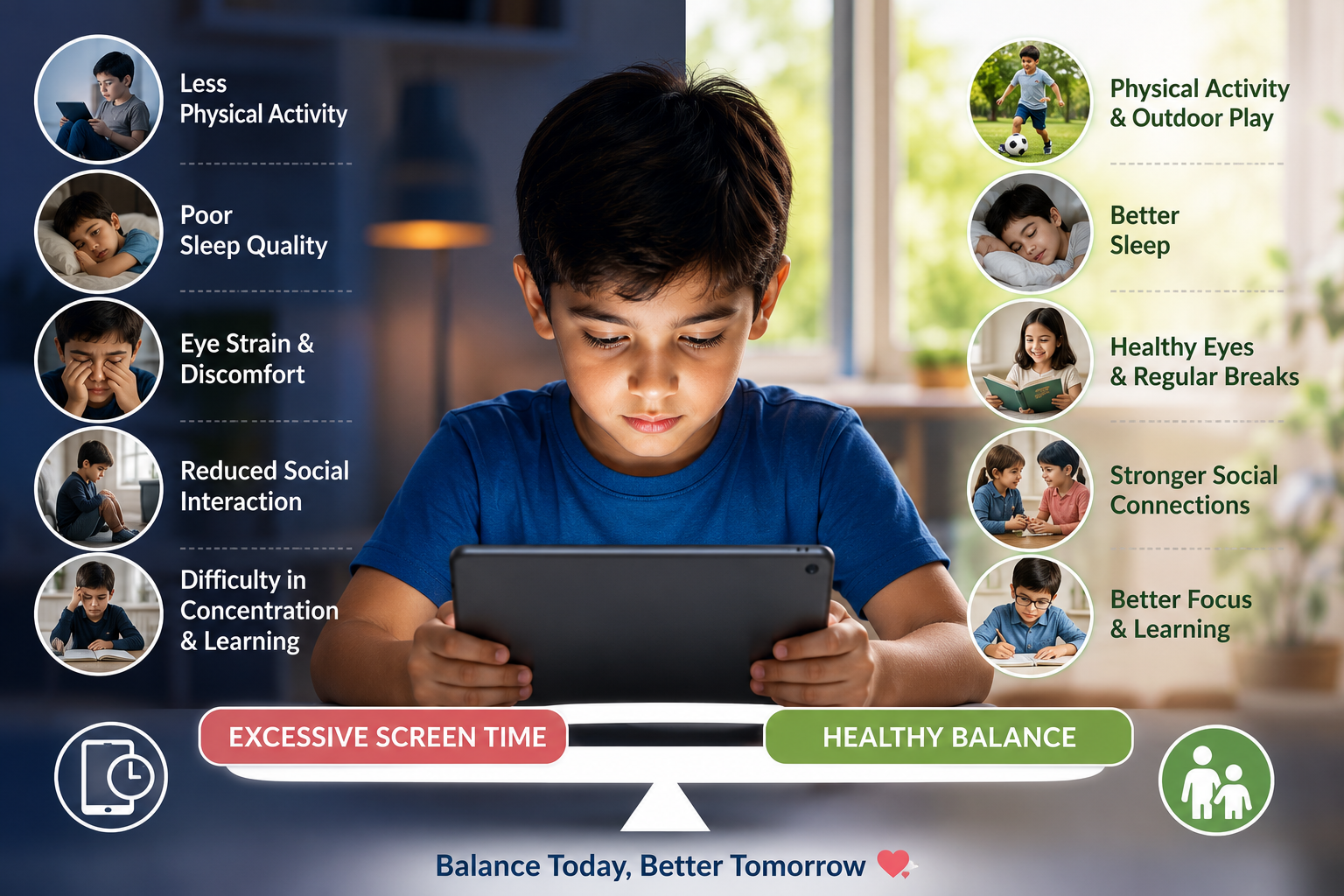
1. Excessive Screen Time
Mobile phones, tablets, computers and televisions can interfere with bedtime routines.
Screen activities may keep children mentally stimulated, while light exposure in the evening can affect the body's natural sleep signals.
2. Irregular Sleep Schedules
Going to bed and waking up at significantly different times each day can disrupt the body's internal sleep-wake rhythm.
3. Stress and Anxiety
School-related pressure, family changes, social difficulties and fear of sleeping alone may affect children's ability to fall asleep.
4. Poor Sleeping Environment
Bright lights, loud noises, uncomfortable temperatures and unsuitable bedding can make sleeping difficult.
5. Excessive Evening Stimulation
Exciting games, physical activities and stimulating entertainment close to bedtime may make it harder for children to relax.
6. Medical Conditions
Certain health conditions may affect sleep, including:
Asthma.
Allergic rhinitis.
Acid reflux.
Eczema and itching.
Enlarged tonsils or adenoids.
Restless legs syndrome.
Identifying and managing an underlying condition may improve sleep quality.
Effects of Poor Sleep on Children's Health
Insufficient or poor-quality sleep can influence several areas of a child's development.
1. Difficulty Concentrating
Children who do not sleep adequately may struggle to focus during classroom activities and homework.
2. Behavioural Changes
Sleep deprivation may contribute to irritability, restlessness, emotional outbursts and difficulty managing feelings.
3. Learning Difficulties
Poor sleep can affect memory, attention and the ability to process new information.
4. Changes in Appetite
Sleep influences hormones involved in hunger and appetite regulation. Inadequate sleep may affect eating patterns.
5. Reduced Physical Energy
Children may feel tired during the day and show less interest in outdoor activities or physical play.
6. Emotional Difficulties
Persistent sleep problems may be associated with increased emotional distress, anxiety and other mental health difficulties.
Good sleep habits are therefore an important part of maintaining children's overall health.
10 Healthy Sleep Habits Parents Should Encourage
Parents can support better sleep by making small but consistent changes to daily routines.
1. Maintain a Fixed Bedtime
Encourage children to go to bed and wake up at approximately the same time every day, including weekends.
Consistency helps regulate the body's internal clock.
2. Create a Relaxing Bedtime Routine
A simple bedtime routine may include:
Taking a warm bath.
Brushing teeth.
Changing into comfortable nightwear.
Reading a bedtime story.
Listening to calm music.
Turning off the lights.
Repeat these activities in the same order each evening.
3. Limit Screen Time Before Bed
Avoid television, mobile phones, tablets and video games close to bedtime.
For school-age children and teenagers, keeping electronic devices outside the bedroom at night can be helpful.
4. Encourage Physical Activity During the Day
Outdoor play, walking, cycling and age-appropriate physical activities can support healthy sleep.
Avoid vigorous activities immediately before bedtime.
5. Provide a Comfortable Sleeping Environment
The bedroom should ideally be:
Quiet.
Dark or softly lit.
Comfortably cool.
Clean and well ventilated.
Free from unnecessary distractions.
6. Avoid Heavy Meals Close to Bedtime
Offer balanced meals at appropriate times. Avoid large meals immediately before sleeping.
7. Be Careful With Caffeine
Avoid giving children caffeinated drinks such as coffee, tea, energy drinks and cola, particularly in the afternoon and evening.
8. Manage Daytime Naps
Younger children may need daytime naps, but naps that are too long or too late may interfere with night-time sleep.
Adjust nap schedules according to the child's age and sleep needs.
9. Talk About Your Child's Worries
Some children struggle to sleep because of fears, school stress or separation anxiety.
Encourage them to express their feelings and provide reassurance.
10. Be a Good Example
Children learn by observing their parents.
Maintaining healthy sleep routines as a family can encourage children to develop better habits.
A Simple Bedtime Routine for Children
Parents can adapt the following routine according to their child's age and school schedule.
| Time | Activity |
|---|---|
| 7:00 PM | Dinner |
| 7:30 PM | Calm family time |
| 8:00 PM | Bath and brushing teeth |
| 8:15 PM | Bedtime story or reading |
| 8:30 PM | Lights out and sleep |
This is only an example for younger children. Bedtimes should be adjusted according to the child's wake-up time and total sleep requirement.
When Should Parents Consult a Doctor?
Occasional sleep difficulties are common, but persistent problems deserve attention.
Consult a paediatrician if your child:
Regularly struggles to fall asleep or stay asleep.
Snores loudly or frequently.
Gasps, chokes or pauses breathing during sleep.
Experiences persistent nightmares or night terrors.
Shows excessive daytime sleepiness.
Has difficulty concentrating despite adequate sleep opportunity.
Experiences frequent sleepwalking episodes.
Has sleep difficulties associated with pain, itching or breathing problems.
A healthcare professional may review the child's sleep schedule, medical history and symptoms. A sleep diary or further investigation may be recommended.
Frequently Asked Questions About Sleep Problems in Children
1. Why does my child wake up several times at night?
Night-time waking may be associated with developmental changes, discomfort, irregular sleep routines, anxiety or medical conditions. Frequent waking that affects the child's well-being should be evaluated.
2. Is it normal for children to resist bedtime?
Yes. Bedtime resistance is common, particularly among toddlers and preschool children. Consistent routines and calm boundaries can help.
3. Does screen time affect children's sleep?
Yes. Evening screen use may delay bedtime, increase mental stimulation and interfere with healthy sleep routines.
4. What is the best bedtime for school-going children?
There is no single bedtime suitable for every child. Parents should calculate bedtime according to the child's age-based sleep requirement and school wake-up time.
5. Can poor sleep affect a child's school performance?
Yes. Insufficient sleep may affect attention, memory, behaviour and learning, which can influence school performance.
6. Should children take sleeping medicines?
Parents should never give children sleeping pills or sleep supplements without medical guidance. Persistent sleep difficulties need proper assessment to identify the underlying cause.
7. Is snoring normal in children?
Occasional snoring during a cold may happen. However, regular loud snoring, gasping or breathing pauses should be evaluated by a paediatrician.
Conclusion
Healthy sleep is one of the foundations of childhood development. It supports physical growth, learning, emotional balance and everyday activities.
Although occasional sleep difficulties are common, persistent problems should not be ignored. Parents can make a positive difference by maintaining consistent bedtime routines, reducing evening screen exposure and creating a comfortable sleeping environment.
Every child has different sleep needs, and understanding those needs is important for supporting healthy development.
At Care & Cure Homeopathy, we believe that childhood wellness begins with awareness, healthy daily habits and informed healthcare decisions. Parents are encouraged to consult qualified healthcare professionals when sleep problems persist or affect their child's health.
Medical Disclaimer: This article is intended for general educational purposes only and does not replace professional medical advice, diagnosis or treatment. Homeopathy has not been established by reliable scientific evidence as an effective treatment for childhood sleep disorders. Consult a qualified paediatrician if your child experiences persistent sleep difficulties or symptoms of a possible sleep disorder.
Care & Cure Homeopathy
Supporting Healthy Childhood Through Awareness and Care.